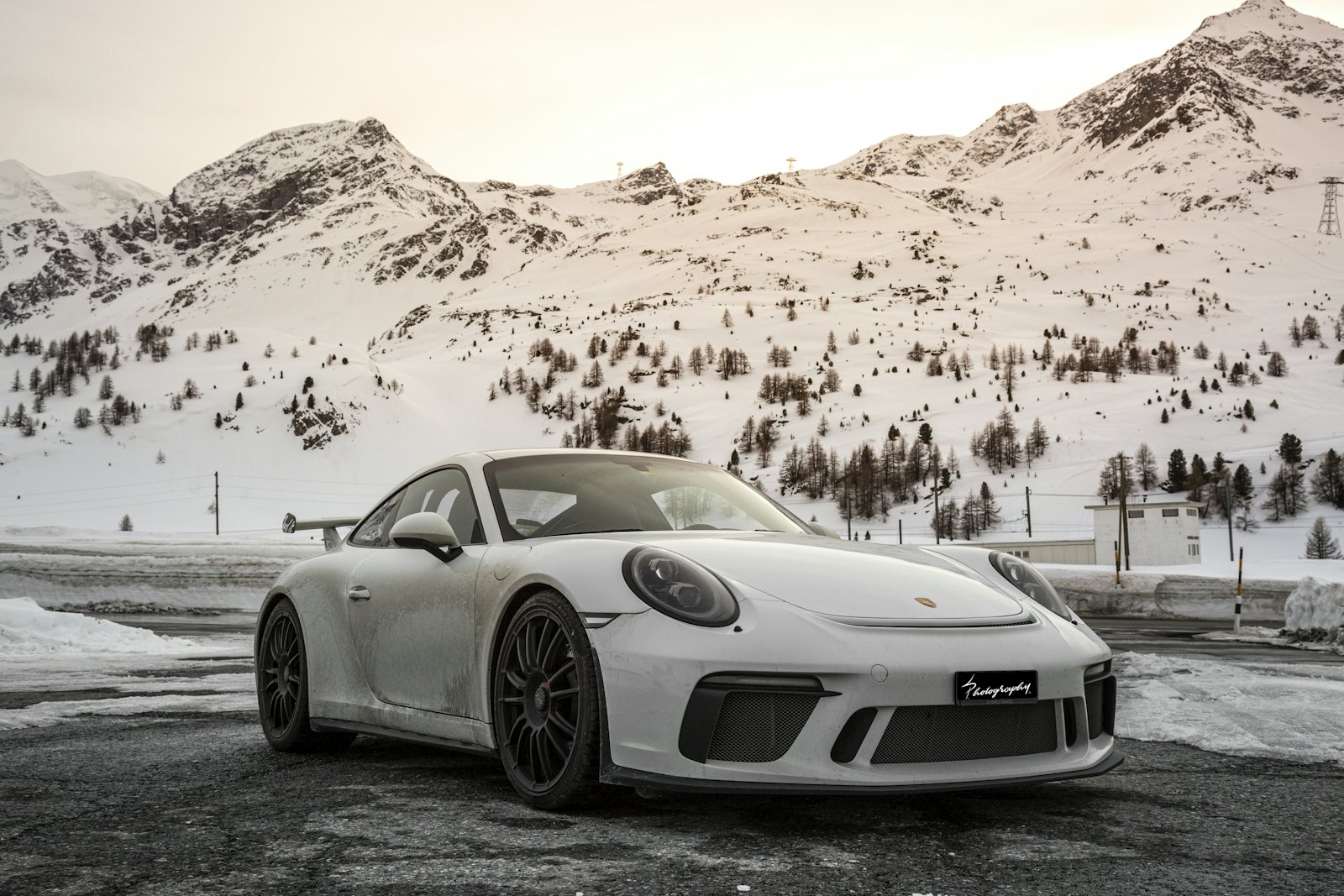
Porsche 911 GT3: The Last Purist
A high-revving flat-six, a manual option and a chassis honed on the Nürburgring. Why the GT3 remains the benchmark.
In this article
In an industry chasing ever-higher power outputs, the Porsche 911 GT3 has always taken a different route. It is defined less by what it can do on paper than by how it communicates with the person behind the wheel.
The engine at the heart
The GT3's naturally aspirated flat-six is the centrepiece. It revs freely and responds instantly, rewarding drivers who use the whole rev range. In a time of turbochargers and hybrid systems, that directness feels rare.
Engineering for feel
Porsche's motorsport department develops the GT3, and it shows. Suspension geometry, steering calibration and aerodynamics are all tuned for precision and feedback rather than raw comfort.
- Steering: detailed, natural and free of artificial weight.
- Chassis: composed on track, yet usable on the road.
- Transmission: a manual option remains — a choice many brands have abandoned.
Why it matters
The GT3 proves that engagement still sells. It shows that drivers value connection, not only numbers. Read how Ferrari makes a similar argument with the 12Cilindri.